Call
Call  Schedule Online
  Contact





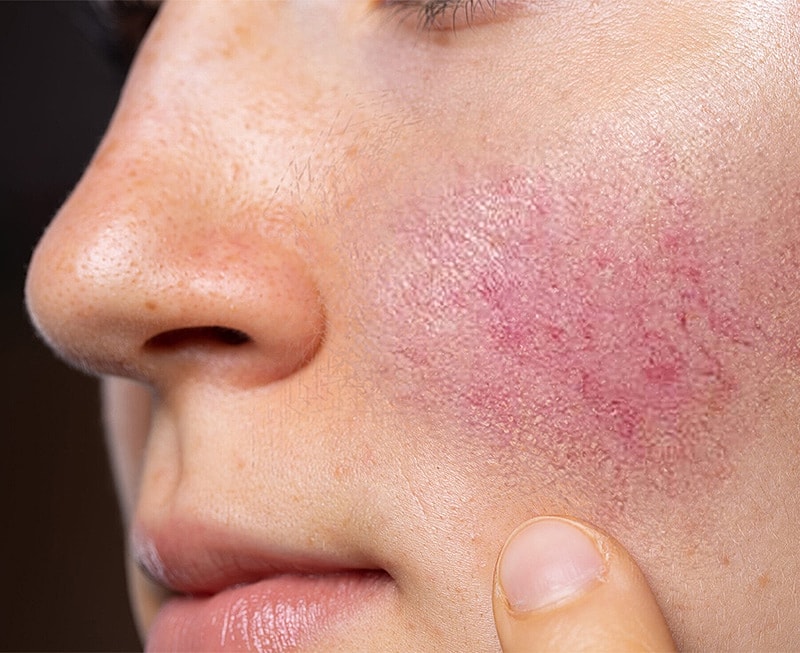
Rosacea tends to occur in fair skin individuals after age 30 and is fairly common. Most people with rosacea notice skin color changes such as red cheeks or even “pimples” popping up as if they were a teenager again. We aren’t really sure why people get rosacea. A few possibilities include inflammation to certain organisms on the skin, sun damage, and vascular malfunction as we age.
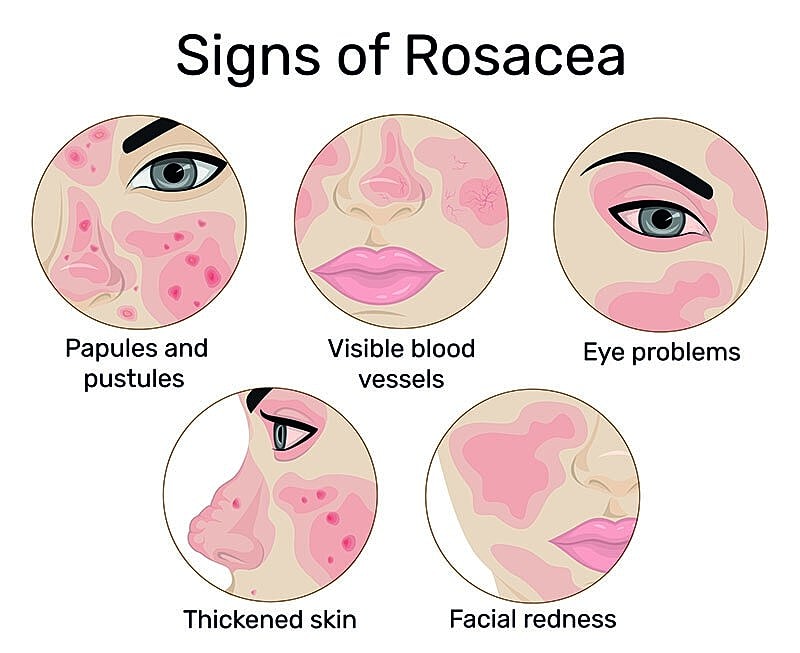
Rosacea presents on the skin in different ways. Some patients will notice long-term redness of the nose and cheeks. Others will notice red pimple-like bumps on their face called papules and pustules. Many complain of flushing of their cheeks along with broken blood vessels around their nose, cheeks, and chin. About 50 percent of patients note involvement in their eyes. Long term rosacea can even include skin texture changes and thickening of the nose and chin. Unfortunately, many patients with rosacea suffer from multiple symptoms; not just one.

We know that certain things can make rosacea worse. Sun exposure, hot beverages, spicy foods, alcohol and even exercise can flare up rosacea.
This does not mean you shouldn’t go out in the sun or eat spicy foods, but it does mean you might want to limit it or take appropriate precautions. Daily sunscreen is a must for those with rosacea. SPF 30 with zinc oxide or titanium dioxide is our recommendation. If you are going out to dinner on a first date maybe avoid spicy food so you don’t get flushed in the cheeks.

The good news is there are plenty of treatment options for rosacea. Everything from topical medications (Metronidazole, Soolantra, Plexion, Mirvaso), oral medications (Minocycline, Doxycycline, Oracea), and even light therapy such as BBL (broadband light) can all reduce your rosacea symptoms.
The most important thing to remember about rosacea is that it is a long-term disease process. Although we can almost always control the disease process we don’t yet have a cure. A lot of times we can reduce treatments once the disease is under control, but almost always we need to continue some type of treatment to keep the disease at rest. Just as important as the treatment is prevention. We know that wearing sunscreen daily and avoiding other triggers such as spicy food, hot beverages, and alcohol can really help.

There’s med spas, and then there’s Ocean Drive Med Spa. Led by Dr. Alan Durkin, Ocean Drive Med Spa is well known among industry professionals as a center for innovation.
Pioneering new technologies and treatments, Ocean Drive Med Spa constantly researches new technologies to ensure the best results for its patients. Ocean Drive Med Spa also features one of the largest laser and energy centers in the nation, offering patients treatments with the latest state-of-the-art tools to create incredible aesthetic experiences. Begin yours today with an appointment at Ocean Drive Med Spa.